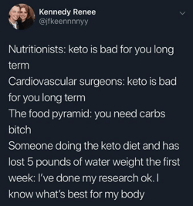
I have decided to analyze an article that I found regarding the Keto diet. This article reviews the popular diet, if it leads to weight loss, and is this diet safe for ordinary people. The keto diet uses the body’s fat-burning system to help people lose a significant amount of weight in a small amount of time. The body will enter a state of ketosis, where ketones will build up in the body. The author, Liz Seegert, is a part of the association of Health Care Journalists, and there are experts such as clinical dieticians weigh in on the safety of this diet.
The author has decided research the keto diet is because it is a trendy topic. Many people see words such as weight loss, fast, and easy, and are drawn immediately to the diet. Losing weight is very hard for some and if they have the option to lose weight fast, they won’t even think twice about trying it even if it’s healthy or not. One of the biggest issues about the Keto diet is that it is not good for your body in the long-run if you are doing it for fun. The article is broken up into five sections, “what ketosis is,” “where it’s helpful,” “when it’s unhealthy,” “the feeding tube approach”, and “how we should not become weight-obsessed.” It is an informing article, persuading the reader that they should do their research and figure out if the diet is right for you. The audience is anyone who wants to try the diet and is unsure if it would be the right choice. It could also be informative to those who are on the diet and need to stop participating because they are harming their bodies. I believe that the most informational and persuasive sections are, “where it’s helpful,” “when it’s unhealthy,” and “how not to be weight-obsessed. “
In the “where it’s helpful” section, there seems to be a lot of sayings negating the diet. The author uses the rhetorical device litotes to show that with all the benefits of the diet, it “would not necessarily improve performance.” For example, the author says that “it [the diet] eliminates a food group, making it easier to follow” and then says it is hard to adhere strictly to the diet. For it to work correctly, you must follow strict guidelines. It also piled on facts about how the keto diet has helped children with refractory epilepsy reducing the number of seizures they have. However, they don’t know how this works or why that is happening. The registered dietician at the Cleveland Clinic Children’s hospital who commonly uses the keto diet for the treatment, says that there is no clear definition of what is happening in their bodies, but uses it anyway. I think that the use of this device is useful because it does show the positives of the keto diet but then discourages those from trying by showing that there are uncertainties and difficulties.
In the “When it’s unhealthy” section of this article, the most effective sentence says how the keto diet should only be considered in extreme cases and how people are only using it for cosmetic reasons, making it dangerous. Once your body moves into ketosis, you will start to lose fat, muscle, and feel extremely fatigued. The end of this cycle puts your body into starvation mode. The diction is what makes this section of the article useful. It is meant to scare the audience into only trying the keto diet in extreme cases. Words such as starvation, caution, extreme, damage, and sensitivity will trigger an emotional response to the readers, scaring them into rethinking as to why they are interested in the diet. The doctors in the article mention that the keto diet can be beneficial to cancer patients, and those with type 2 diabetes to improve insulin sensibility. So, by using scare tactics, the author is trying to convince the reader to do the keto diet only if it benefits their health, not their weight.
The last section of the article sympathizes with the reader asking if they are considering the keto diet because they are obsessed losing weight or if they need it to regulate something in their body. Marketing this diet to a society that is obsessed with losing weight is good. These “fad” diets are not healthy for us in the long run. The use of the rhetorical device eutrepismus makes the audience assess any diet on their own. You set realistic personal goals by evaluating the diet plan. First, is the diet good in the long term, second, does it include exercise, and third, will it meet your long-term health goals. If you take this assessment to the keto diet, you will find that for many people doing it, will say no to all, which is a red flag. This use of eutrepismus structured the questions in a way that the reader would think about different diets and find the best one that suits their lifestyle. Overall, I believe that this article is effective in getting through to the audiences. I am a firm believer that the keto diet is unhealthy for people doing it to lose weight. A large amount of fat can be dangerous, and this keto diet takes that to an extreme cutting out fat completely. This article has convinced me that in some cases, the keto diet can be beneficial to those who need it. I did not believe that this diet was good for anyone at this point, but this article has convinced me that regarding diets, we need to assess our personal needs to find the lifestyle best for us.
 carina laukaitis